


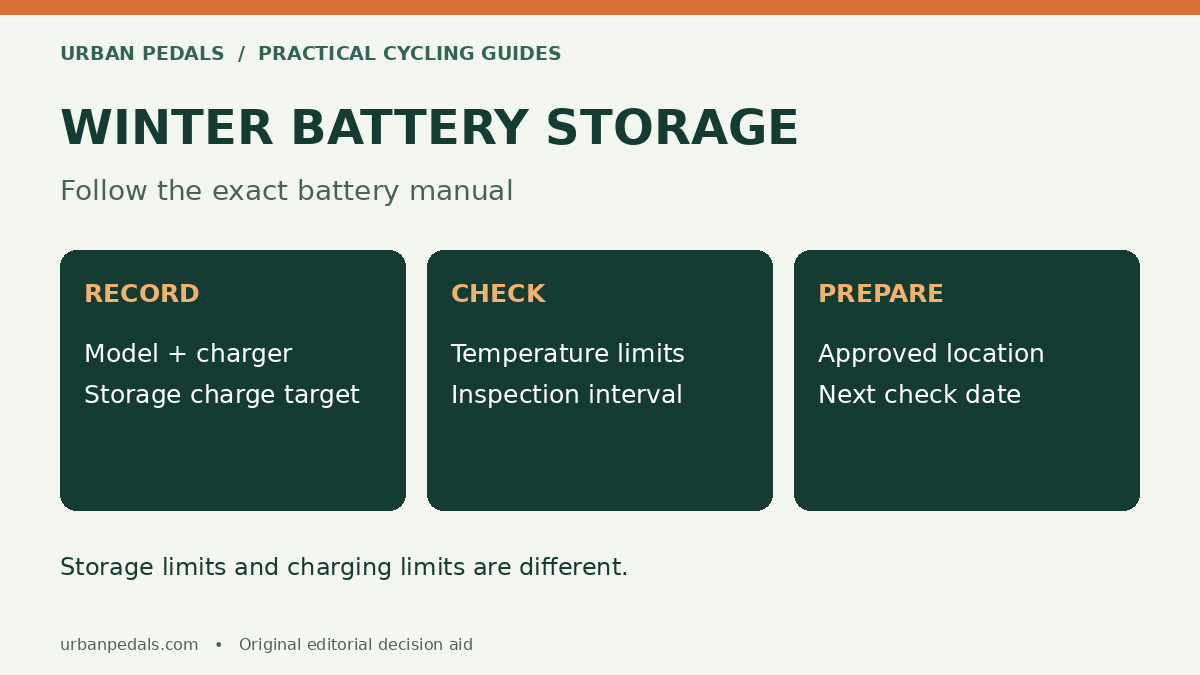
Winter storage starts with the manual for your exact e-bike battery. The recommended charge level, temperature limits and inspection interval vary by system. A storage percentage from another brand is not a universal rule.
First decide: storage or regular winter riding?
If you will keep commuting, plan a repeatable routine for bringing the battery into permitted charging conditions and reinstalling it correctly. If the bike will sit unused for weeks or months, follow the manufacturer’s long-term storage procedure. A full charge for tomorrow’s ride and a storage charge serve different purposes.
Complete this storage record
| Record | Where to find it |
|---|---|
| Battery model and system generation | Battery label and bicycle documentation |
| Approved charger | Manufacturer instructions and charger label |
| Storage charge target | Exact battery manual |
| Storage and charging temperature ranges | Read these as separate limits |
| Next inspection date | Manufacturer’s storage interval |
| Storage location | A place meeting the manual’s environmental requirements |
As a manufacturer-specific example, Bosch’s battery guidance recommends an ideal long-term storage charge of 30–60%. It gives temperature guidance and recommends a dry, ventilated location with a smoke detector, away from heat and flammable materials. Use the current instructions for your Bosch generation, and do not apply that percentage automatically to every e-bike brand.
Prepare the battery and bicycle
- Inspect the battery housing and connections for damage before charging or storage.
- Clean and dry the bicycle using the manufacturer’s permitted method.
- Remove the battery only if it is designed for owner removal.
- Bring the charge to the documented storage target.
- Store the battery securely and protect exposed contacts as instructed.
- Record the date and set a reminder for the prescribed check.
If the pack is integrated or the removal procedure is unclear, have the dealer explain how to store the bicycle. Do not open the battery enclosure. A storage routine should never require cell-level work or an improvised electrical connection.
Do not confuse cold storage with charging permission
A temperature allowed for storage may be outside the allowed charging range. After bringing a cold battery indoors, let it reach the charging conditions required by its manual and ensure connections are dry. Do not use a heater or another improvised method to force the process.
The CPSC advises charging while present and awake, using the supplied or manufacturer-recommended charger. Follow the manufacturer’s completion instructions. Do not leave the battery connected throughout a storage period unless its instructions explicitly require a particular approved arrangement.
During storage and before the first ride
Check the pack at the interval specified in its manual, record its condition and follow any recharge guidance. If there is swelling, damage, unusual heat or an error, stop and ask the manufacturer for instructions rather than trying repeated charging attempts.
Before returning the bike to use, inspect the tires, brakes, drivetrain and battery attachment. Charge within the permitted conditions and take a short local ride before committing to a long journey. Plan conservatively while learning how winter conditions affect your own route.
For capacity and replacement questions, read our electric bicycle battery guide. For daily trips, combine this routine with the winter commuting checklist.
Sources and further reading
- Bosch: questions about e-bike batteries
- CPSC: micromobility battery safety
- Tern: caring for Bosch batteries
Editorial note: This is a research-based guide, not a hands-on product test. Check the instructions for your exact bicycle and components before maintenance.



Leave a comment