


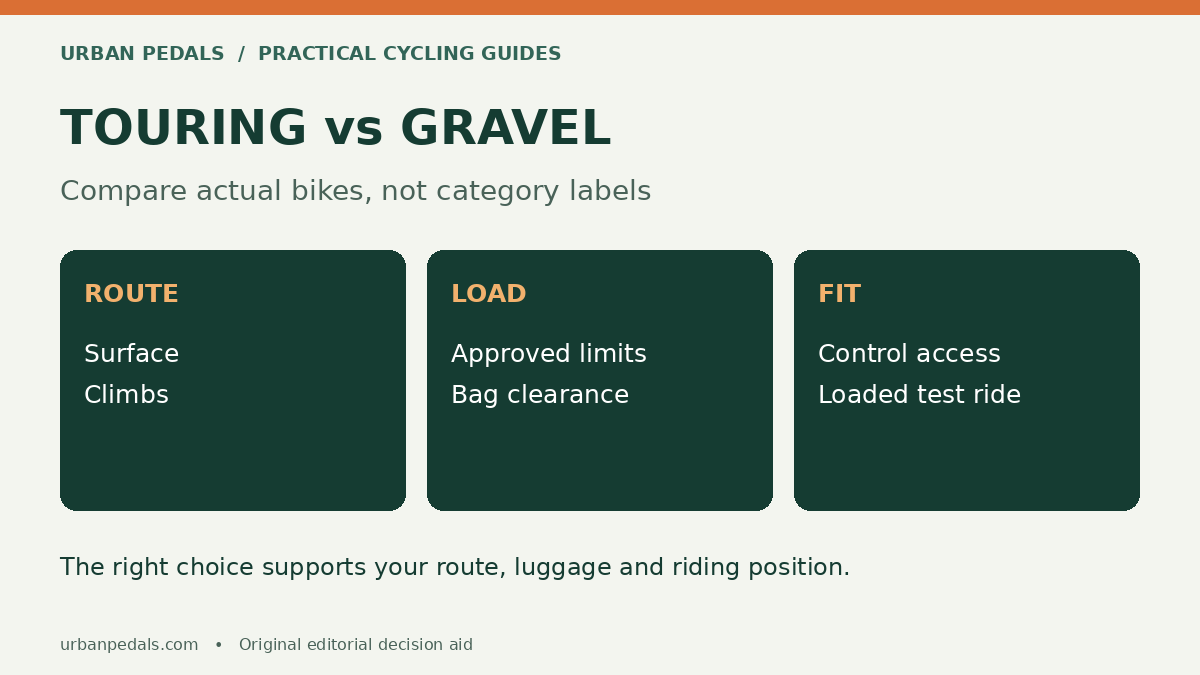
A touring bike often prioritizes carrying luggage over long distances, while a gravel bike may prioritize versatility across pavement and unpaved surfaces. There is considerable overlap. Choose between actual models using your route, load and fit, not the category name alone.
Compare the features that affect your trip
| Decision | What to compare on either bike |
|---|---|
| Carrying camping equipment | Approved racks, total load limit, bag clearance and handling |
| Climbing with luggage | Lowest gear with the intended wheel and tire size |
| Riding rough surfaces | Tire clearance, tire choice and manufacturer’s intended-use category |
| Long riding days | Fit, control access and comfortable riding positions |
| Travel far from shops | Serviceability and availability of compatible replacement parts |
Adventure Cycling includes gravel bicycles among the options for touring. That does not mean every gravel racing model is designed to carry heavy panniers. Similarly, a traditional touring bike’s name does not make it suitable for every off-road route.
When a touring bike deserves the first look
Start with touring-oriented models when your trip includes substantial luggage, repeated loaded riding and a preference for racks and panniers. Confirm that the complete bicycle supports the planned weight. Check rack and wheel ratings separately, and read whether the bicycle’s system limit includes the rider and bicycle.
Ask the seller to demonstrate bag fit. Your heels should not strike the panniers, and mounting hardware should not interfere with brakes or cables. A loaded test ride is more informative than judging a bare bicycle on the showroom floor.
When a gravel bike may suit you
Consider a gravel bike if most of your riding is unloaded or lightly loaded and you want one bicycle for mixed-surface day rides and occasional trips. Verify luggage mounting and clearances rather than assuming soft bags fit every frame size.
A frame bag may displace water bottles. A large saddle bag needs adequate tire clearance and a suitable seatpost arrangement. Handlebar luggage must not obstruct steering, controls or lights. These are setup questions to resolve on the specific bike before departure.
Compare gearing with a simple calculation
For bicycles with similar wheel sizes, divide the smallest front chainring tooth count by the largest rear sprocket tooth count. A hypothetical 30/36 combination is about 0.83; 40/42 is about 0.95. The first is a lower ratio. This is a useful screening calculation, not a complete prediction of how climbing will feel.
Ride a representative hill with luggage. If the easiest gear is unsuitable, ask about compatible changes before buying; drivetrain modifications may require several parts. The touring bike buying guide explains the wider selection process.
Use a two-bike decision worksheet
- Write the same route and luggage assumptions for both candidates.
- Record each manufacturer’s load limits and approved uses.
- Fit the intended bags and note any conflicts.
- Compare the easiest gear and climbing experience.
- Record comfort and control access during each test ride.
- Add racks, bags, fitting changes and required service to the total cost.
If both candidates meet your needs, choose based on the riding you will do most often. A first local overnight trip can also reveal whether your existing bicycle is already sufficient. Pack tools that match it using our bicycle tool kit guide and rehearse routine repairs before leaving.
Sources and further reading
Editorial note: This is a research-based guide, not a hands-on product test. Check the instructions for your exact bicycle and components before maintenance.




Leave a comment