


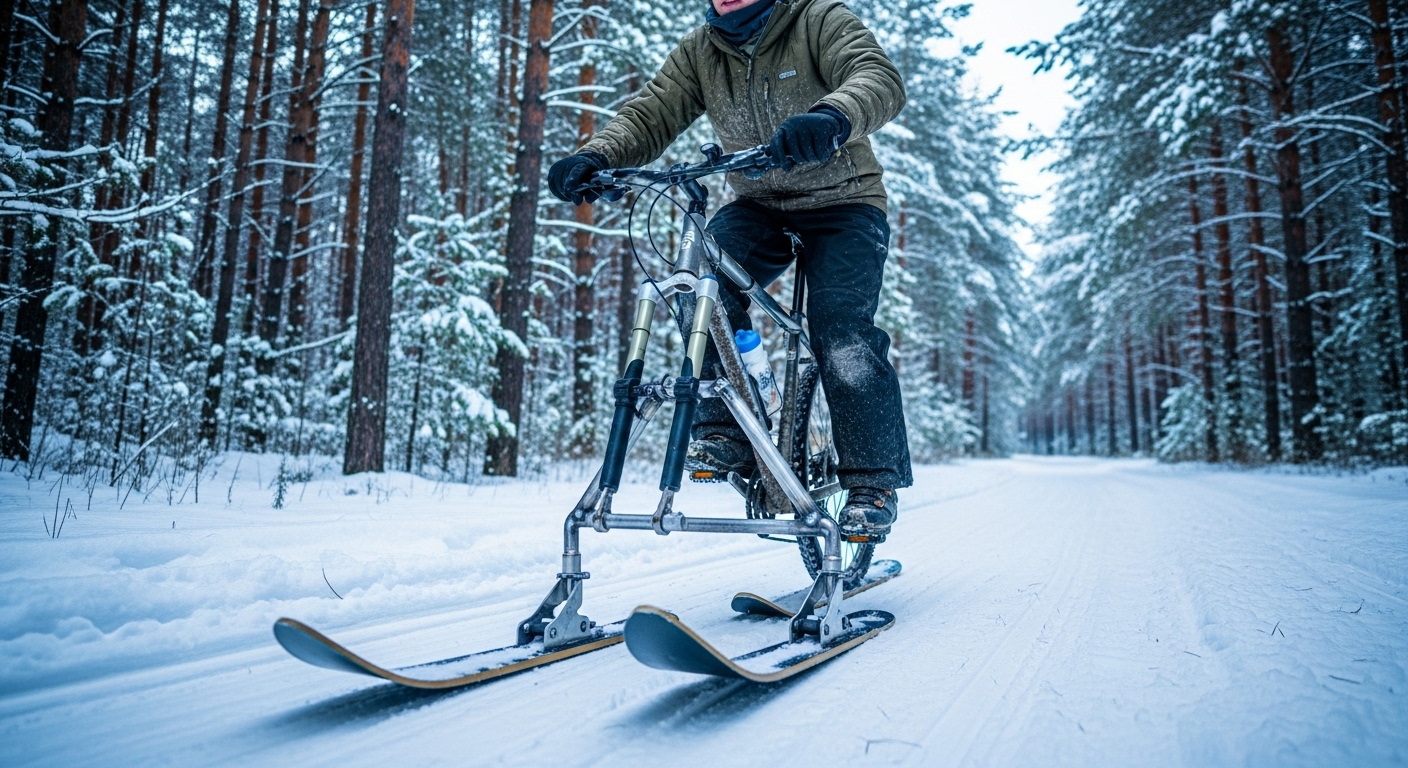
“Skis for bicycles” can mean a purpose-built downhill ski bike or a conversion kit for a compatible bicycle. These are specialized snow-sports setups. Replacing wheels with skis does not create an ordinary pedal-powered commuter that works on every snowy road.
Three different winter riding choices
| Setup | Typical purpose | What to establish first |
|---|---|---|
| Purpose-built ski bike | Downhill riding on approved slopes | Resort permission, equipment rules and instruction |
| Bicycle conversion kit | Convert a specifically compatible bike for snow use | Frame, fork, axle and geometry approval |
| Bicycle with winter tires | Pedaling on routes suitable for winter cycling | Surface conditions, tire fit and a safe route |
What changes when wheels become skis?
SkiByk describes its ski bikes as downhill equipment carried uphill by a lift. Without a driven rear wheel, pedaling does not provide the usual bicycle propulsion. Turning and stopping also differ from cycling: do not expect bicycle brake levers to produce ordinary wheel braking after a conversion.
A ski bike can be enjoyable on suitable terrain, but a claim that skis automatically provide better grip on ice is misleading. Surface conditions, ski edges, equipment setup and rider skill all matter. Arrange instruction and begin only on terrain the operator and instructor consider appropriate.
Conversion kits are not universal
Sledgehammer publishes specific requirements for its conversion system, including suitable mountain-bike geometry, suspension and axle standards. That is a useful example of why wheel diameter alone does not establish compatibility. Specifications can change by kit generation, so obtain the current instructions for the exact product.
Before buying, send the manufacturer your bicycle model and year, frame size, fork model, axle measurements and suspension information. Ask whether the proposed conversion is approved and what limitations apply. Keep the written answer with the assembly instructions.
- Confirm every required adapter and retention component.
- Check the specified assembly sequence and tightening values.
- Ask how the conversion affects the original bike warranty.
- Establish inspection and maintenance requirements.
- Do not improvise adapters or drill a frame or fork.
Check the resort before traveling
Policies can differ between resorts and lifts. Confirm that your equipment type is accepted, whether a lesson or evaluation is required, what retention system is needed and which trails are permitted. A general list of ski-bike-friendly resorts is a starting point, not permission for a particular day or setup.
Renting suitable equipment with instruction can help you decide whether the activity fits your interests before converting a bicycle. Compare the total cost of the kit, assembly, transport and instruction, not just the advertised adapter price.
For commuting, plan around the route
If your goal is getting to work by bicycle through winter, start with our winter commuting checklist. A clear, maintained route and suitable bicycle equipment are different decisions from a downhill ski-bike purchase. Skip the ride when conditions exceed your equipment or skills.
For powered bicycles, also read the e-bike battery guide; cold-weather battery care requires the manufacturer’s instructions regardless of your tire choice.
Sources and further reading
Editorial note: This is a research-based guide, not a hands-on product test. Check the instructions for your exact bicycle and components before maintenance.





Leave a comment