


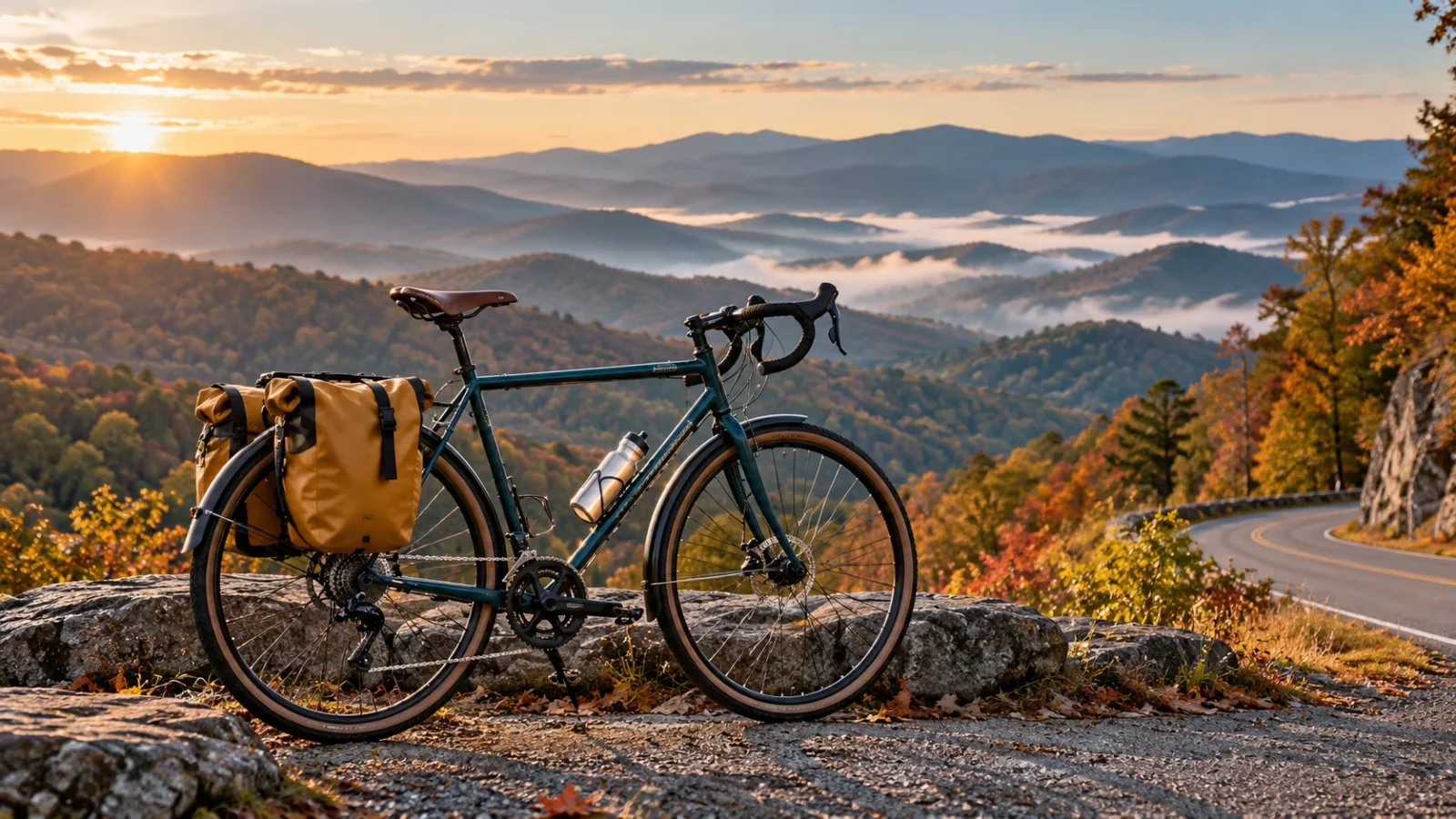
Choose a touring bike for the trip you will ride, the luggage you will carry and the position you can maintain comfortably. The words “touring,” “gravel” and “hybrid” are useful starting points, but a model name cannot confirm fit, load capacity or handling with your bags.
Write your trip brief first
List the surface, steepest climbs, distance between services and overnight accommodation. A supported tour with a small day bag asks different things of a bike than a camping trip carrying food, water and shelter. For a first overnight trip near home, evaluate your current bike before deciding you need a new one.
| Your trip | First checks |
|---|---|
| Paved touring with panniers | Rack approval, heel clearance, loaded handling |
| Mixed pavement and gravel | Tire clearance, surface suitability and low gearing |
| Remote camping | Total load, repair access, water capacity and spare parts |
| Supported tour | Fit over consecutive days and realistic daily mileage |
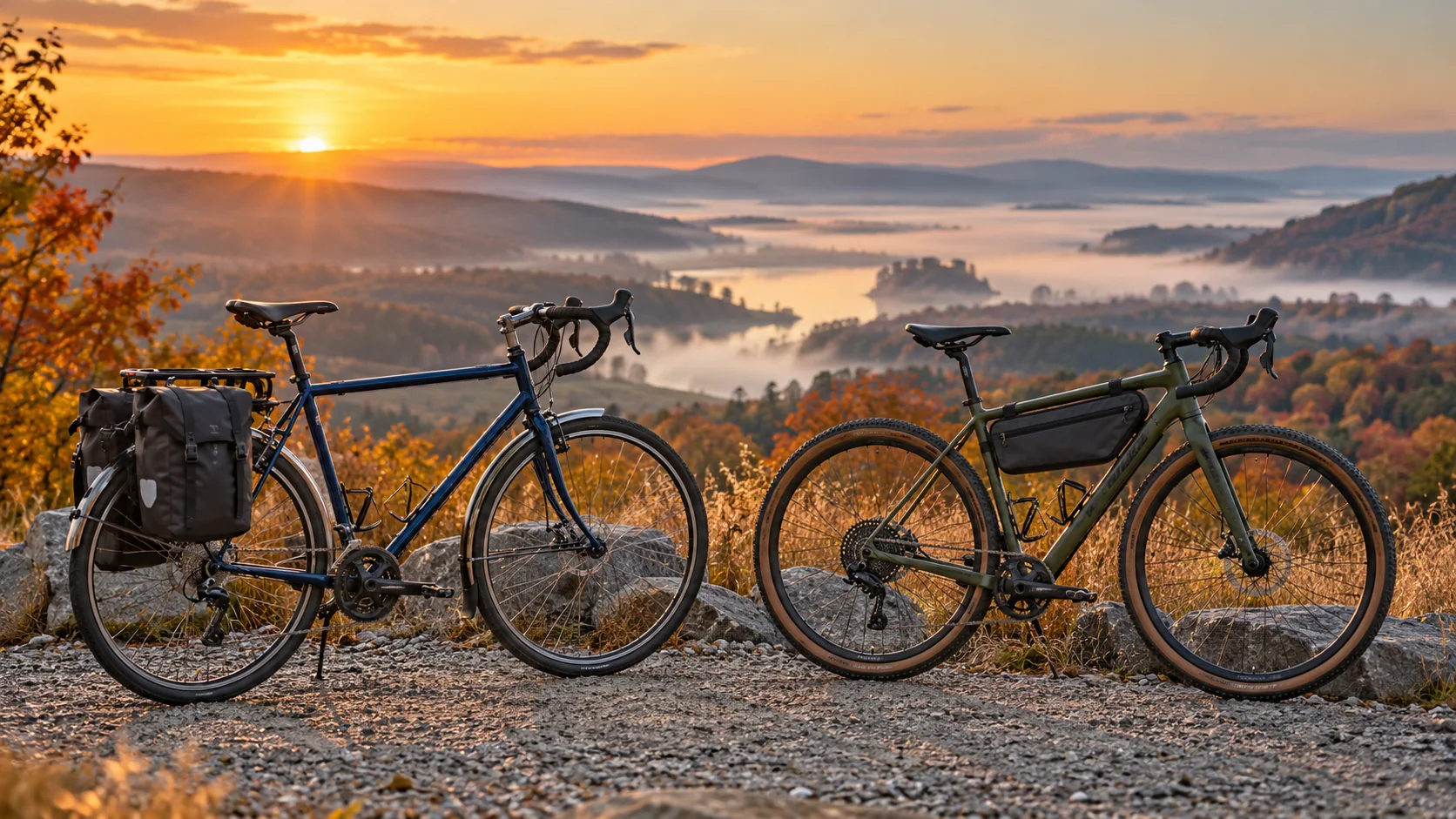
Fit and comfort come before frame material
Adventure Cycling emphasizes comfort and maintainability when choosing a touring bicycle. Your reach to the bars, saddle position and ability to operate the controls matter over consecutive days. A short spin around a parking lot cannot reproduce a full tour, but it can reveal a clearly unsuitable size.
Do not assume that steel is automatically comfortable or aluminum automatically uncomfortable. Evaluate the complete bike and its setup. Reserve part of the budget for fitting adjustments, luggage, lights and maintenance rather than spending everything on the frame.
Look at the easiest gear, not the gear count
Count the teeth on the smallest front chainring and largest rear sprocket. Their ratio gives a first comparison of climbing gears when wheel sizes are similar. For example, 30 divided by 36 is about 0.83; 34 divided by 34 is 1.00. The lower ratio produces less wheel rotation per crank revolution. These are illustrative calculations, not a universal touring specification.
Try the candidate bike on a climb with representative luggage. A bicycle with more advertised speeds does not necessarily offer an easier bottom gear. Ask a shop about compatible gearing changes rather than assuming a larger cassette will fit the derailleur.
Check the complete load system
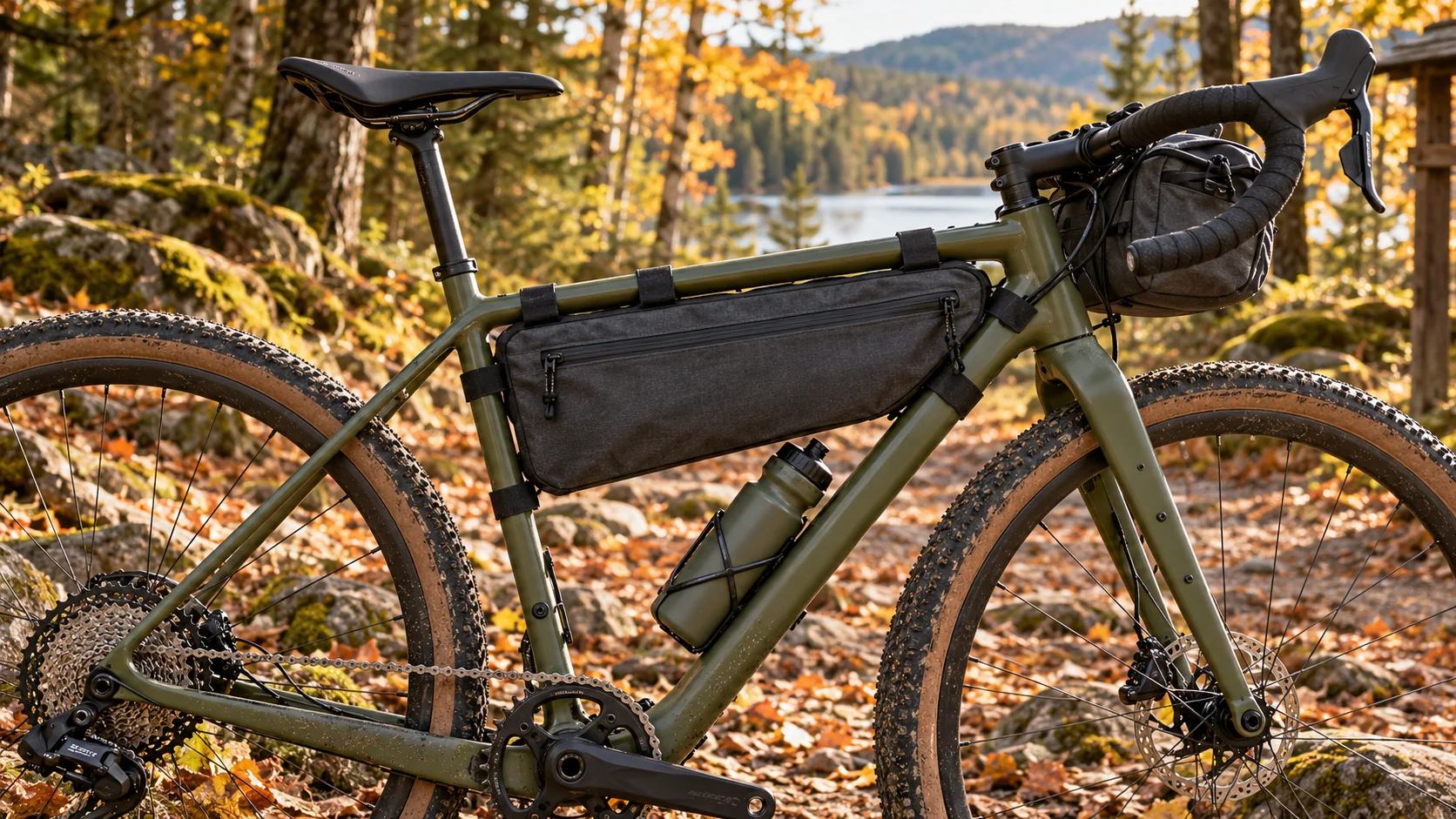
Read the bicycle, wheel, rack and bag limits, including what each limit counts. A system-weight limit may include the rider and bicycle as well as cargo. The lowest applicable limit governs the setup. Rack mounting holes alone do not establish a safe load rating.
Fit bags before your practice ride. Check heel clearance, steering movement, cable interference and space between tires and bags. Tire clearance must also accommodate any fenders specified by the manufacturer. Compare the tradeoffs in our touring bike versus gravel bike guide.
Use this test-ride worksheet
- Adjust the bike within the maker’s permitted limits.
- Ride seated and standing, and reach every control.
- Test the easiest gear on a representative incline.
- Carry securely mounted, representative luggage.
- Check for heel strikes, bag movement and discomfort.
- Confirm service parts and repair support along the route.
Keep notes for each candidate so a showroom impression does not replace a fair comparison. Finish with a local shakedown trip that allows an easy return. Our bicycle tool kit guide helps you choose tools for the maintenance tasks you can perform.
Images are AI-generated editorial illustrations, not photographs of tested products or exact model references.
Sources and further reading
Editorial note: This is a research-based guide, not a hands-on product test. Check the instructions for your exact bicycle and components before maintenance.




Leave a comment